

 Français
 Español
 Products

 About Us



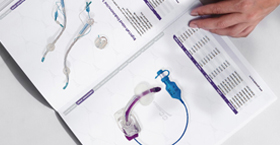

A mucosal atomization device can be supplied as a complete kit or as an atomizer tip only, depending on the buyer’s needs. Some configurations include a syringe, while others are supplied without a syringe for buyers who already have compatible syringes.
Nasal mucosal atomization devices and laryngo-tracheal mucosal atomization devices belong to the same product category, but they are used for different application areas and usually differ in the applicator tip design.
For distributors, hospitals, EMS suppliers, anesthesia departments, and OEM customers, choosing the right configuration helps reduce compatibility issues and simplify procurement.
Common Mucosal Atomization Device Configurations
In B2B medical procurement, a mucosal atomization device may refer to several configurations:
| Configuration | Typical Use |
|---|---|
| Complete kit | For buyers who need a ready-matched setup |
| Atomizer tip only | For buyers with existing compatible syringes |
| Nasal mucosal atomization device | For intranasal application |
| Laryngo-tracheal applicator | For laryngeal or tracheal application |
| Customized kit | For OEM, private label, or distributor packaging |
Before ordering, buyers should confirm what is included in the package, especially whether the syringe is included.
Complete Kit or Atomizer Tip Only?
A complete kit is suitable when buyers want an easier and more standardized purchasing option. It may include the atomizer, syringe, and matching accessories depending on the selected configuration.
An atomizer tip only option is suitable when buyers already have compatible syringes or want to assemble the final kit by themselves. This option is common for distributors, kit assemblers, and OEM/private label customers.
| Option | Best For | Advantage |
|---|---|---|
| Complete kit | Hospitals, EMS suppliers, distributors | Easier purchasing and lower mismatch risk |
| Atomizer tip only | OEM customers, kit assemblers, buyers with syringes | More flexible and cost-efficient |
| Customized kit | Private label or regional distributors | Supports brand and packaging needs |
Does It Need to Be Used with a Syringe?
Yes, in most cases, a mucosal atomization device is used with a syringe. The syringe provides the pressure needed to push liquid through the atomizer and create a fine mist.
However, the syringe may or may not be included. Buyers should confirm:
| Item to Confirm | Why It Matters |
|---|---|
| Syringe included or not | Confirms the actual package contents |
| Syringe size | Helps avoid compatibility issues |
| Connection type | Ensures proper matching |
| Sterile packaging | Meets hospital or distributor requirements |
| Packaging format | Supports storage, distribution, or OEM needs |
Can the Atomizer Tip Be Purchased Separately?
Yes. Atomizer tips can often be purchased separately, especially for buyers who already have compatible syringes or need flexible packaging.
This option is suitable for:
Medical distributors
OEM/private label customers
Kit assemblers
Hospitals with existing syringe supply
Buyers managing multiple SKUs
Before purchasing atomizer tips only, buyers should confirm syringe compatibility, connection type, packaging, and intended application.
Nasal MAD vs Laryngo-Tracheal MAD
The main difference between a nasal mucosal atomization device and a laryngo-tracheal mucosal atomization device is the application area and applicator tip design.
| Product Type | Application Area | Typical Feature |
|---|---|---|
| Nasal mucosal atomization device | Nasal cavity | Short atomizer tip |
| Laryngo-tracheal mucosal atomization applicator | Laryngeal or tracheal area | Longer applicator tip |
| Atomizer tip | Depends on configuration | Tip component only |
A nasal MAD is mainly selected for intranasal use. A laryngo-tracheal applicator is selected when a longer or more targeted applicator is required.
Are Nasal MAD and Laryngo-Tracheal MAD the Same Product?
They are related, but they should not be treated as the same product.
Structurally, the main difference may be the tip or applicator design. From a procurement perspective, they are different configurations because they are intended for different application areas.
Buyers should choose based on:
Application area
Applicator tip design
Syringe compatibility
Packaging requirement
Department or end-user need
How Should Buyers Choose?
| Buyer Type | Recommended Configuration |
|---|---|
Hospital procurement team | Complete kit |
| EMS distributor | Nasal MAD or complete kit |
| Anesthesia supplier | Laryngo-tracheal applicator |
| Operating room supplier | Laryngo-tracheal applicator |
| OEM/private label customer | Atomizer tip or customized kit |
| Kit assembler | Atomizer tip only |
| Regional distributor | Multiple configurations |
For first-time buyers, a complete kit is usually easier to manage. For experienced distributors or OEM customers, atomizer tips may offer better flexibility.
Key Questions Before Ordering
Before placing an order, buyers should confirm:
Is it supplied as a complete kit or atomizer tip only?
Is the syringe included?
What syringe size is compatible?
Is it for nasal or laryngo-tracheal use?
Is sterile packaging required?
Can the atomizer tip be purchased separately?
Are OEM or private label options available?
What are the MOQ and lead time?
Clear answers to these questions help reduce wrong orders and improve procurement efficiency.
Final Buying Advice
When choosing a mucosal atomization device, buyers should first confirm the intended application area. For intranasal use, a nasal mucosal atomization device is usually selected. For laryngeal or tracheal application, a laryngo-tracheal applicator may be more suitable.
Next, buyers should decide whether they need a complete kit or only the atomizer tip. A complete kit is easier for standardized purchasing, while atomizer tips provide more flexibility for buyers with existing syringes or customized packaging needs.
If you are sourcing mucosal atomization devices for hospital supply, emergency care distribution, anesthesia use, or OEM packaging, confirm your required configuration, syringe option, packaging format, and order quantity before purchasing.
FAQ
Is a mucosal atomization device sold with a syringe?
It depends on the configuration. Some products are supplied with a syringe, while others are supplied without a syringe.
Can I buy only the atomizer tip?
Yes. Atomizer tips may be available separately for distributors, OEM customers, kit assemblers, or buyers with compatible syringes.
What is the difference between a complete kit and atomizer tip only?
A complete kit provides a ready-matched setup. An atomizer tip-only option includes only the atomizer component and requires a compatible syringe.
What is the difference between nasal MAD and laryngo-tracheal MAD?
A nasal MAD is mainly used for intranasal application. A laryngo-tracheal MAD uses a longer or specially designed applicator for laryngeal or tracheal application.
Are nasal MAD and laryngo-tracheal MAD the same product?
They belong to the same mucosal atomization device category, but they are different configurations for different application areas.
Which configuration is better for distributors?
Distributors may carry complete kits, atomizer tips, and laryngo-tracheal applicators to meet different customer needs.
Related Products
- Intranasal Mucosal Atomization Device
- Laryngo-Tracheal Mucosal Atomization Device