

 Français
 Español
 Products

 About Us




Quick Answer
A Salem Sump tube is a dual-lumen nasogastric tube designed primarily for gastric decompression and drainage. The larger lumen is used for gastric suction, while the smaller vent lumen allows air to enter the system and support the sump function during suction. Although some Salem Sump configurations may allow administration through the appropriate lumen, they are not primarily designed as dedicated enteral feeding tubes. Feeding capability depends on the specific tube design, connector configuration, and instructions for use.
What Is a Salem Sump Tube?
A Salem Sump tube is a type of large-bore nasogastric (NG) tube featuring a dual-lumen design. It is inserted through the nose into the stomach and is commonly associated with gastric drainage and decompression.
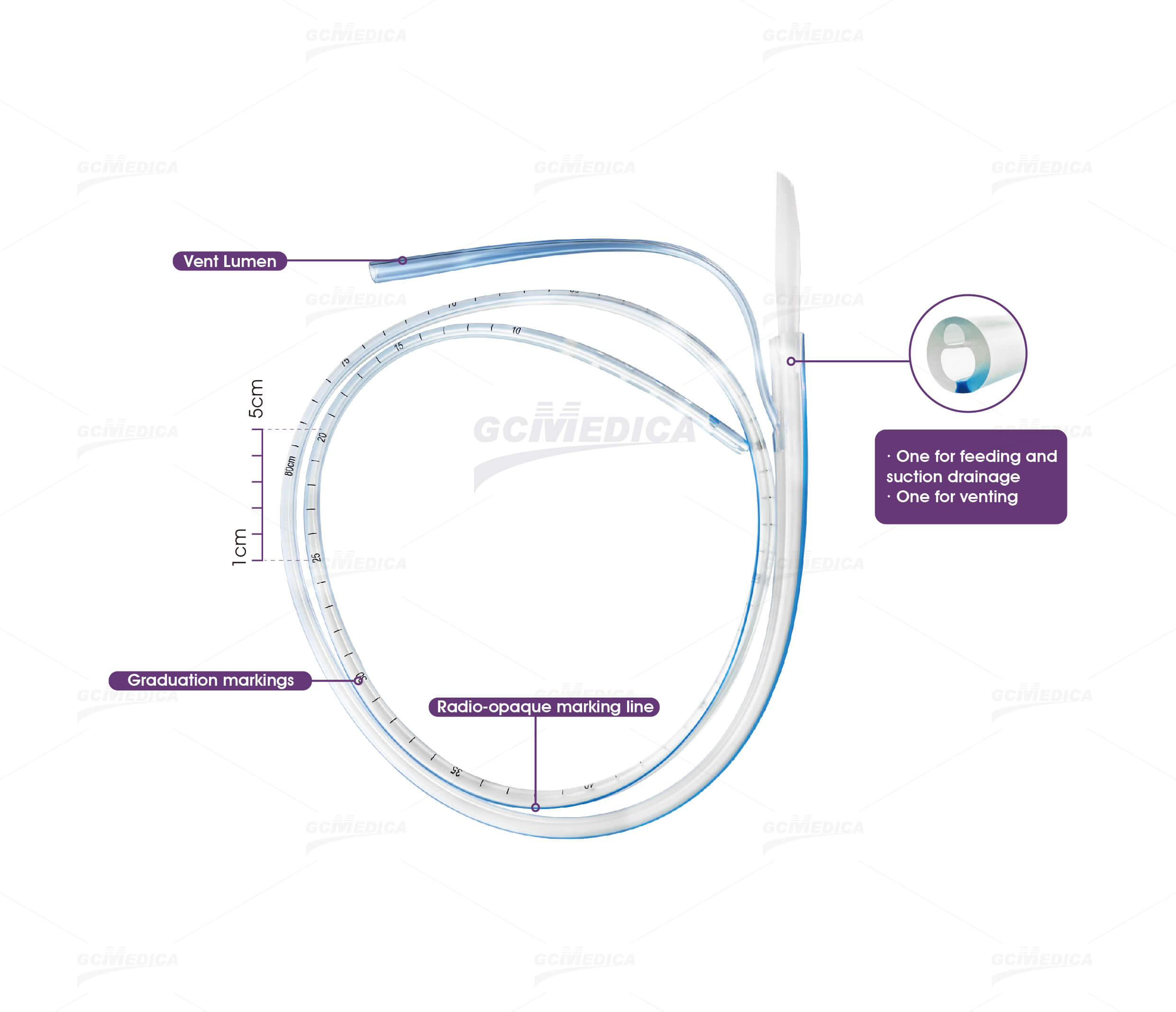
Unlike many standard single-lumen gastric tubes, a Salem Sump tube contains two separate pathways with different functions: one lumen provides access for suction and drainage, while the other acts as an air vent to support the sump mechanism.
Because of this design, Salem Sump tubes are sometimes described as dual-lumen NG tubes, gastric sump tubes, or Salem Sump nasogastric tubes.
View Dual Lumen Stomach Tube (Salem Sump) >
How Does a Salem Sump Tube Work?
The working principle of a Salem Sump tube depends on the interaction between its two lumens. The dual-lumen structure allows gastric contents to be removed while maintaining an air pathway that supports controlled suction.
Main Suction Lumen
The larger lumen is the primary pathway for gastric drainage. It may be connected to a prescribed suction or drainage system to remove gastric fluid, swallowed air, and other stomach contents.
Air-Vent Lumen
The smaller lumen functions as an air vent. It allows atmospheric air to enter the tube system during suction, helping maintain the sump action and reducing excessive negative pressure at the distal openings.
The vent lumen is not a second suction channel and should not be considered a general-purpose access pathway unless specifically indicated by the product instructions.
| Tube Component | Primary Function | Key Consideration |
|---|---|---|
| Main lumen | Gastric drainage and suction | Provides the main pathway for removing gastric contents |
| Air-vent lumen | Allows airflow into the system | Supports sump function during suction |
| Distal openings | Provide access for gastric drainage | Configuration depends on the specific product design |
Why Does the Vent Lumen Matter?
When suction is applied through a gastric tube, maintaining an appropriate airflow pathway is important for the sump mechanism to function correctly.
The vent lumen allows air to enter the system while suction removes gastric contents through the main lumen. This separation of functions is the main design feature that differentiates a Salem Sump tube from many traditional single-lumen gastric tubes.
Learn more: What Is a Salem Sump Tube Used For? >
Can a Salem Sump Tube Be Used for Feeding?
Salem Sump tubes are primarily designed for gastric decompression and drainage rather than as dedicated enteral feeding tubes. Their dual-lumen structure is optimized for removing gastric contents while maintaining a vent pathway during suction.
In some situations, fluids, medications, or nutritional solutions may be administered through the appropriate lumen when permitted by the specific tube design, connector configuration, and clinical protocol. However, feeding capability should not be assumed simply because a Salem Sump tube is a type of nasogastric tube.
Before using a Salem Sump tube for any administration purpose, healthcare providers should confirm the intended function of each lumen and follow the manufacturer's instructions for use.
Why Is a Salem Sump Tube Different From a Feeding Tube?
Although both Salem Sump tubes and feeding tubes may be inserted through the nose into the stomach, they are designed for different primary purposes.
| Comparison | Salem Sump Tube | Enteral Feeding Tube |
|---|---|---|
| Primary purpose | Gastric decompression and drainage | Delivery of nutrition, fluids, or medication |
| Tube design | Usually dual lumen with suction and vent pathways | Usually designed around delivery of enteral solutions |
| Suction capability | Designed for gastric suction or drainage | Generally not intended for continuous gastric suction |
| Vent pathway | Includes a dedicated air-vent lumen | Usually does not include a separate sump vent |
| Typical selection reason | Removal of gastric contents and decompression | Nutritional support and administration |
Read more: Salem Sump Tube vs NG Tube >
Which Lumen Is Used for Feeding?
The correct lumen for administration depends on the specific Salem Sump tube design and the manufacturer's instructions. The two lumens have different functions and should not be considered interchangeable.
Main lumen: Primarily intended for gastric drainage and suction functions.
Vent lumen: Designed to allow airflow and support sump function. It is not intended as a routine feeding pathway.
Because lumen functions vary between product configurations, buyers and users should verify the intended use of each connector before administration.
Salem Sump Tube Feeding Compatibility: What Buyers Should Confirm
For hospitals, distributors, and OEM partners, feeding-related compatibility should be confirmed according to the actual product specification rather than the general tube category.
| Item | What to Confirm |
|---|---|
| Lumen configuration | Which lumen is designed for suction, venting, or other administration functions |
| Connector design | Connector type and compatibility with intended applications |
| Tube size | Available French sizes and length options |
| ENFit options | Whether ENFit connectors are available if required |
| Documentation | IFU, labeling, regulatory documents, and product specifications |
Frequently Asked Questions
Is a Salem Sump tube a feeding tube?
A Salem Sump tube is a dual-lumen nasogastric tube primarily designed for gastric decompression and drainage. It is not generally classified as a dedicated enteral feeding tube.
Can you feed through a Salem Sump tube?
Feeding capability depends on the specific Salem Sump tube configuration, connector design, and clinical protocol. The manufacturer’s instructions should always be reviewed before administration.
Which lumen is used for suction on a Salem Sump tube?
The larger lumen is used for gastric drainage and suction, while the smaller lumen functions as the air vent.
What is the blue port on a Salem Sump tube?
The blue port is commonly associated with the air-vent lumen, which allows air entry into the sump system during suction.
Conclusion
A Salem Sump tube is best understood as a dual-lumen NG tube designed mainly for gastric decompression and drainage. Its suction lumen and vent lumen work together to support the sump function during gastric management.
While some configurations may support certain administration functions, Salem Sump tubes should not be considered equivalent to dedicated feeding tubes. Product design, connector compatibility, and manufacturer instructions should guide any feeding-related use.
Related Pages
- Salem Sump Stomach Tube: Dual-Lumen NG Tube Explained